Steel vs Wood Framing: The Complete Pros and Cons Comparison for California Builders
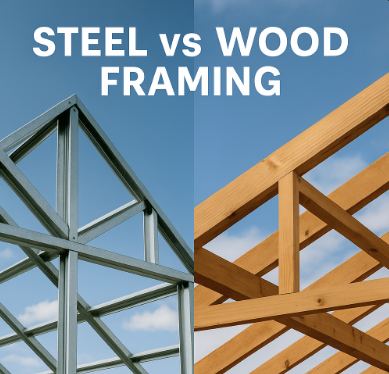
One of the most significant choices when designing a new garage, workshop, storage facility, or commercial building is whether to use steel or wood for the framing. Understanding the steel vs wood framing pros and cons helps you make a decision that affects your structure for decades.
Both options have passionate supporters. Your neighbor may swear by wood, while your contractor highlights steel frame building benefits. It’s no wonder the advice online is often conflicting. This choice affects durability, maintenance, insurance, and costs for decades, so it deserves careful consideration.
Here’s a clear breakdown to help California builders make informed decisions about steel frame vs. wood frame construction.
Steel vs Wood Framing: What You Need to Know
Neither steel nor wood is universally “better.” The right choice depends on your budget, priorities, and how you plan to use your building. The main trade-off? Upfront cost versus lifetime value. Wood usually costs less initially but requires ongoing maintenance, while steel comes with a higher upfront price but offers decades of low-maintenance performance.
In California, the decision gets more complex. Wildfire risk, coastal humidity, termites, seismic requirements, and extreme temperatures all affect which material is most practical. When weighing a wood vs steel building comparison, understanding these factors ensures your building stands strong for years.
Why Your Framing Choice Impacts Decades of Ownership
Your framing decision isn’t one you’ll revisit every few years; it impacts your structure for 20, 30, or even 50+ years. This choice affects maintenance costs, insurance rates, and your building’s long-term condition.
California’s specific challenges make it even more critical: wildfires, pests, moisture, and seismic activity all test a structure’s durability. Some materials demand constant care, while others let you build it and forget it. That difference in peace of mind adds real value.
Steel Framing: Pros and Cons
Metal Framing Advantages
Durability & Longevity: Steel doesn’t rot, warp, or crack. It maintains integrity for decades with minimal degradation.
Pest Resistance: Termites and carpenter ants can’t damage steel, saving thousands in inspections and treatments.
Fire Resistance: Non-combustible steel reduces fire risk, a critical factor in California’s wildfire zones.
Weather Resistance: Steel handles coastal salt air, inland heat, and extreme weather without warping or mold.
Low Maintenance: No painting, sealing, or chemical treatments needed. Galvanized steel resists rust for decades.
Dimensional Stability: Steel doesn’t expand or contract with temperature changes, keeping walls straight and doors aligned.
Strength-to-Weight Ratio: Stronger per pound than wood, allowing longer spans and more flexible layouts.
Steel Framing Disadvantages
Higher Upfront Cost: Steel materials and installation typically cost 10–30% more than wood.
Specialized Labor Required: Not all contractors have experience with steel frame vs wood frame construction.
Thermal Conductivity: Steel conducts heat and cold, requiring proper insulation.
Modification Challenges: Adding windows or doors later can be more complicated than with wood.
Wood Framing: Pros and Cons
Wood Framing Advantages
Lower Initial Cost: Wood is generally cheaper upfront, which suits tighter budgets.
Contractor Familiarity: Most California builders have extensive wood framing experience.
Easy Modifications: Wood is simple to cut, drill, or move with basic tools.
Natural Insulation: Wood offers some thermal benefits without additional materials.
Wood Framing Disadvantages
Rot & Decay: Moisture leads to deterioration, especially in coastal regions or areas with fog.
Pest Vulnerability: Termites and other pests remain a constant threat.
Fire Risk: Combustible wood increases insurance costs and fire danger.
Warping & Twisting: Humidity and temperature changes cause doors to stick, walls to bow, and floors to settle.
Ongoing Maintenance: Inspections, pest treatments, painting, and repairs are required regularly.
Shorter Lifespan: Even well-maintained wood structures last 30–50 years, shorter than steel.
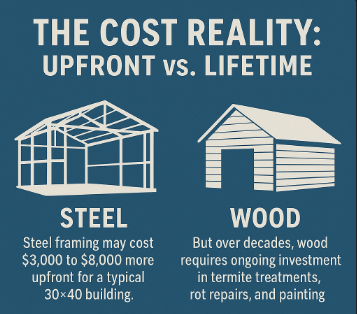
The Cost Comparison Steel vs Wood Framing: Upfront vs Lifetime
Steel framing may cost $3,000 to $8,000 more upfront for a typical 30×40 building. But over decades, wood requires ongoing investment in termite treatments, rot repairs, and painting. Maintenance costs for wood can easily exceed steel’s initial premium.
Insurance matters, too. Steel-framed buildings in fire-prone areas often qualify for lower premiums. Over the long term, steel offers better ROI when durability, minimal maintenance, and peace of mind are priorities. This cost comparison of steel vs wood framing reveals that total ownership costs often favor steel despite higher initial investment.
Making the Right Choice for Your Project
When evaluating the steel vs wood framing pros and cons, steel excels in longevity, fire resistance, pest immunity, and low maintenance, while wood offers lower upfront costs and widespread contractor familiarity. Neither option is wrong; one simply fits your project better.
Consider your timeline, maintenance tolerance, and total ownership costs when making the decision. For long-term savings, especially in California’s diverse and sometimes harsh conditions, the many metal framing advantages may make steel the smarter choice.
For guidance on wood vs steel building comparison for your next project, contact California All Steel for honest, practical advice tailored to your building needs.
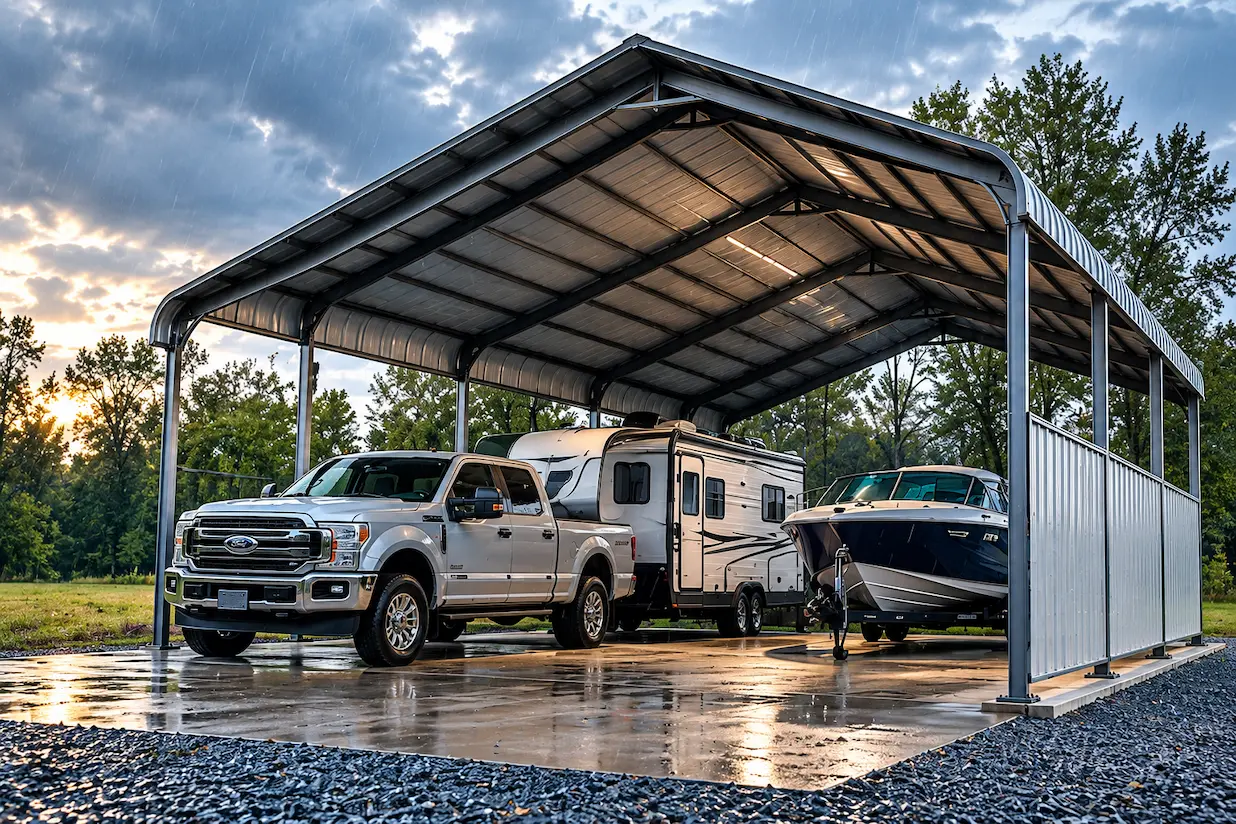
Protect your vehicles, RVs, and boats with premium-grade steel carports. Custom sizing, and fast delivery. Financing available! Get your free quote today.