Building Metal Pole Barn: Complete Guide for California Property Owners
Property owners across California are discovering what farmers and ranchers have known for decades: metal pole barns deliver unbeatable value. Whether you need equipment storage, a workshop, agricultural space, or commercial operations, these structures combine affordability with durability.
However, you might be asking yourself, “How much will it cost?” “Can I build it myself?” “What size do I need?” This guide answers those questions and walks you through the entire process, from planning to completion.
Why Metal Pole Barns Are Smart Investments
According to Home Cost, traditional construction costs average $215-$430 per square foot in California. Metal pole barns run $12-$45 per square foot for materials and installation, a fraction of the cost while delivering comparable or superior durability.
Speed is another advantage. A 40×60 metal pole barn goes up in 1-2 weeks with a professional crew. Conventional construction takes months. That means you’re protecting your equipment and putting your space to work faster.
California’s climate makes metal the practical choice. Wildfire burn area has increased dramatically over the past 40 years. The 2018 Camp Fire alone destroyed over 19,000 structures. Non-combustible metal roofs qualify for California FAIR Plan insurance discounts up to 14.5% and deliver real fire resistance that wood can’t match. Galvanized steel resists coastal salt air corrosion, and metal’s strength-to-weight ratio performs well under seismic requirements.
Long-term costs drop dramatically, too. Metal doesn’t rot, warp, or attract termites. While wood structures demand maintenance every 5-10 years at costs reaching thousands, metal buildings require virtually nothing beyond occasional cleaning and rust checks.
Popular Metal Pole Barn Sizes and Pricing
Metal pole barn pricing scales predictably by size, with the 30×40 offering the best cost-to-space ratio for most buyers. Larger sizes accommodate commercial, agricultural, and industrial needs with significantly lower costs than conventional construction.
30×40×16 pole barn ($18,000–$28,000): This 1,200 square foot structure fits three vehicles comfortably with room for a workbench and storage. The 16-foot height accommodates RVs, boats, and equipment. Homeowners typically use this for combination garage-workshop setups.
40×60 metal building ($28,000–$48,000): At 2,400 square feet, this size works for small businesses, agricultural operations, or large residential needs. Contractors and farmers use the space for multiple vehicles, inventory, and work areas. Many add climate-controlled offices or retail space.
100×100 pole barn ($90,000–$160,000): This 10,000 square foot structure serves manufacturing, large agricultural facilities, and equipment dealerships. The clear-span design means no interior posts limiting your layout.
100×200 pole barn ($180,000–$320,000): Major operations need this 20,000 square feet. Distribution centers, large-scale farming, and manufacturing facilities operate at this scale. Compare it to conventional construction at $3-5 million for equivalent space.
Pricing depends on location, site prep, and customization. Common additions: insulation ($1.50-$3/sq ft), extra doors ($800-$3,000 each), concrete floors ($4-$8/sq ft).
Pole Barn Kit vs Building From Scratch
The cost, timeline, and risk of building from scratch versus using a pole barn kit differ. Each option offers different levels of engineering support, labor responsibility, and overall reliability.
Pole barn kits
Pole barn kits include pre-engineered components, stamped drawings, and clear assembly instructions. Material costs typically range from $8 to $20 per square foot and reflect built-in engineering expertise, quality control, and time savings. Most kits can be assembled by capable DIY builders with help in approximately 2 to 4 weeks.
Building from scratch
Building from scratch may reduce material costs by 15 to 25 percent, but it requires sourcing compatible components and handling all structural calculations independently. Design or measurement errors can lead to delays, code issues, and expensive rework, particularly without professional construction or engineering experience.
For most builders, the reduced risk, faster completion, and engineered reliability of a pole barn kit outweigh the modest cost savings of building from scratch.
Step-by-Step Guide to Building a Metal Pole Barn
Before you break ground, you need a solid plan on paper. The choices you make in this first phase (size, permits, site conditions, and budget) set the timeline and costs for everything that follows.
Phase 1 – Planning and Permits
Begin by defining the building’s purpose and size. Storage, workshop, and mixed-use buildings require different layouts, and adding 20 to 30 percent extra space helps avoid outgrowing the structure later.
Most California structures over 120 square feet require permits, with costs typically ranging from $500 to $3,000 depending on location and size. Requirements vary by county, so contact your local building department early. Agricultural zones may allow more flexibility than residential or commercial areas.
Assess the site to determine foundation needs. Soil conditions, drainage, setbacks, and utility access directly affect design and cost. Budget beyond materials by accounting for site preparation at $2,000 to $8,000, foundation work at $3,000 to $15,000, utilities at $2,000 to $10,000, and a 10 to 15 percent contingency.
Plan realistic timelines. Permit approval usually takes 2 to 8 weeks, site preparation 1 to 2 weeks, and construction 1 to 4 weeks. Most projects are completed within 8 to 16 weeks.
Phase 2 – Site Preparation
Clear and grade the site so water drains away from the building. Poor drainage leads to long-term structural and moisture problems.
Select a foundation based on use and budget. Concrete piers with embedded posts are cost-effective for many builds. A concrete slab provides a finished floor, improved moisture control, and easier conversion to a workshop or office, but often adds 1 to 2 weeks to the schedule.
Plan utilities before construction begins. Running electrical, water, or gas lines after the structure is complete increases labor costs and risks damage. Mark routes clearly and coordinate with trades in advance.
Phase 3 – Post Installation and Framing
Set posts according to engineered plans. Spacing, depth, and alignment are critical. Posts typically embed 4 to 6 feet deep depending on soil and regional requirements. Northern California mountain areas often require deeper embedment than coastal regions.
Anchor posts with concrete and keep them plumb while curing. Allow 24 to 48 hours before continuing construction.
Install horizontal girts at specified heights to support wall panels and provide lateral stability. Roof trusses span the building width and create a clear interior. Trusses arrive pre-assembled and should be lifted into place, secured, aligned, and braced according to engineering specifications.
Phase 4 – Metal Panel Installation
Install roof panels first, working methodically from one end to the other. Follow manufacturer overlap requirements, typically 6 to 8 inches on side laps and about 6 inches on end laps. Use approved fasteners with rubber washers at recommended spacing. Avoid over-tightening.
Once the roof is watertight, install wall panels from bottom to top. Keep overlaps straight and fastener patterns consistent. Finish corners, bases, and transitions with trim.
Frame door and window openings before hanging panels. Openings require reinforced framing to support hardware and prevent panel distortion. Most pole barns include at least one overhead door and one walk-through door. Ensure openings are square and properly braced.
Phase 5 – Finishing Touches
Install doors and windows according to manufacturer specifications with proper flashing and sealant. Correct installation prevents leaks, drafts, and pest entry. Overhead doors require precise alignment, and professional installation is often worthwhile.
Add insulation to control temperature and condensation. Common options include fiberglass batts, spray foam, and insulation blankets. A vapor barrier is essential to prevent moisture buildup beneath metal panels.
Finish the interior based on use. Storage buildings may remain open, while workshops or offices require framing, lighting, electrical outlets, and HVAC. Concrete floors can remain bare or be sealed or epoxy-coated for durability and easier cleaning.
Complete drainage and inspections. Install gutters and downspouts to direct water away from the foundation. Schedule final inspections as required. Most California jurisdictions require structural, electrical, and plumbing approval before issuing an occupancy permit.
Additional Things to Know
Before building, understand the regulatory and environmental factors that can affect design, permitting, and long-term performance. These considerations help prevent delays, code issues, and costly corrections.
Licensing comes first. Most permitted work requires a properly licensed contractor. Projects involving structural steel typically require the appropriate CSLB classification, commonly C-51. As of January 1, 2025, California’s minor-work threshold is $1,000, and licensing is required if a permit is needed, employee labor is used, or the contract value meets that amount
Seismic requirements are not optional in California. Most jurisdictions require engineered plans that account for seismic zone conditions, including bracing, connection hardware, and foundation anchoring.
Wildfire zones add extra rules. Properties in State Responsibility Areas or Very High Fire Hazard Severity Zones must meet wildfire construction standards. Metal construction helps, but approved roof assemblies, proper detailing, and defensible space are still required.
Coastal moisture speeds up rust when materials are mismatched. Galvanized panels, stainless or coated fasteners, and compatible flashings extend service life. A simple rinse schedule can also help in heavy salt-air areas.
Snow loads matter in mountain and northern regions. Roof pitch, purlin sizing, and structural elements must meet local snow load requirements. Engineered plans help prevent costly corrections.
Wind matters statewide. Proper panel overlap, fastener spacing, and structural connections are critical to storm resistance, regardless of metal thickness.
Your Metal Pole Barn Project Starts With the Right Partner
Metal pole barns deliver exceptional value when properly planned and built. The combination of lower costs, faster construction, durability, and versatility makes them ideal for California property owners facing diverse storage and workspace needs.
Success requires the right size for current and future needs, proper permits and code compliance, quality materials suited to your climate, and expert installation that ensures decades of trouble-free performance.
Ready to begin your metal pole barn project? Contact California All Steel for a free consultation and free custom quote. Our C-51 licensed team handles everything from design and permits to installation, making your project hassle-free from start to finish.
Frequently Asked Questions About Building Metal Pole Barns
Is it cheaper to build a pole barn or a metal building?
Metal pole barns typically cost $15-$25 per square foot installed, while traditional metal buildings run $25-$40 per square foot due to full foundation requirements. Pole barns use embedded posts rather than complete slabs, reducing foundation costs significantly. For long-term value, both offer similar durability and low maintenance compared to wood structures.
What is the average cost of a 40×60 metal building?
A 40×60 metal building (2,400 square feet) costs $28,000-$48,000 for basic materials and standard features in California. Professional installation, site preparation, foundation, permits, and finishing typically brings total costs to $60,000-$96,000. Upgraded features like insulation, multiple overhead doors, windows, and interior finishing can push costs towards $100,000-$120,000.
How much does it cost to build a 20×20 pole barn?
A 20×20 pole barn (400 square feet) costs $4,000-$8,000 for a basic DIY kit with metal siding. Professional installation adds $3,000-$6,000, bringing total costs to $8,000-$15,000, including site preparation and foundation. This size works well for equipment storage, small workshops, or single-vehicle garages.
Is it cheaper to buy a pole barn kit or build it yourself?
Pole barn kits cost $8-$20 per square foot and include pre-cut, engineered components that ensure proper fit and code compliance. Building completely from scratch might save 15-20% on materials but requires extensive knowledge and risks costly errors. Most property owners find kits offer the best value, significantly cheaper than professional builds, while much easier than sourcing everything independently.
How long does it take to build a metal pole barn?
Professional installation of a 30×40 metal pole barn takes 1-2 weeks after site preparation is complete. Larger structures like 100×100 buildings require 3-4 weeks. DIY builds take 3-8 weeks depending on experience and available help, with site preparation adding another 1-2 weeks and permit approval requiring 2-8 weeks in California.
Do I need a permit to build a metal pole barn in California?
Yes, California requires building permits for most structures over 120 square feet, with costs ranging from $500 to $3,000 depending on size and jurisdiction. Permits ensure compliance with seismic, fire, setback, and structural codes. Some agricultural zones have relaxed requirements, but checking with your local building department is essential to avoid future complications.
What size pole barn do I need?
Size depends on intended use. Allow 12-14 feet width per vehicle, plus 20-30% extra for future needs and maneuvering space. A 30×40 barn comfortably fits three vehicles with workspace, while 40×60, serves small businesses or serious agricultural operations. Select the largest size that your property and budget permit, as most property owners regret building too small.
Can I insulate a metal pole barn?
Yes, metal pole barns accept various insulation types, including fiberglass batts ($0.50-$1.50/sq ft), spray foam ($2-$4/sq ft), or metal building insulation blankets. Proper insulation with vapor barriers prevents condensation, reduces energy costs, and maintains comfortable temperatures year-round. In California’s varied climate, insulation dramatically improves usability, especially in inland areas with temperature extremes.
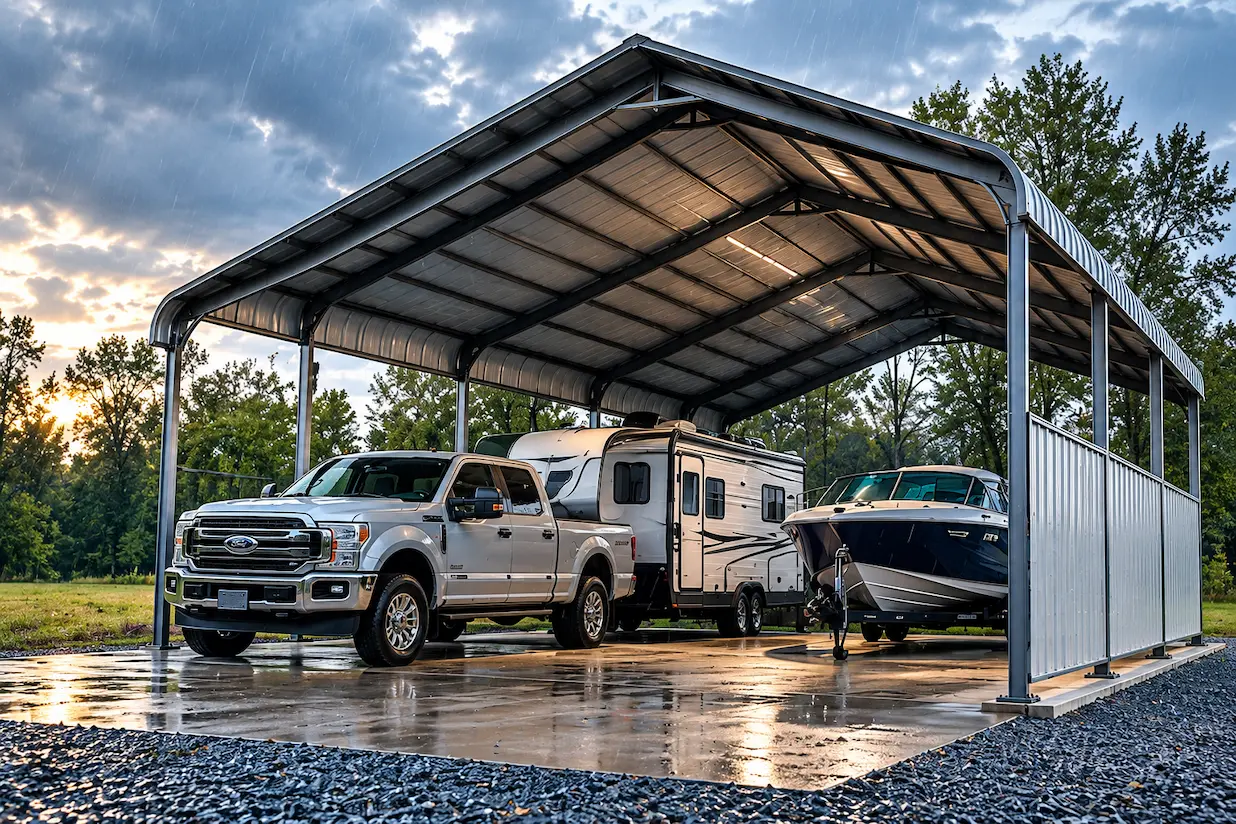
Protect your vehicles, RVs, and boats with premium-grade steel carports. Custom sizing, and fast delivery. Financing available! Get your free quote today.