Most buying guides for metal buildings assume California conditions by default — sunny, dry, and mostly flat, with permit rules and engineering assumptions written around that climate. California All Steel delivers throughout Oregon too, where two things work differently enough to matter before ordering: the permit exemption threshold, and how much snow load actually varies from one property to the next.
Neither difference is minor. A structure sized and permitted the way a California buyer would expect can end up either over-engineered or under-permitted once the same logic gets applied to an Oregon property. The two states share a building type, not a rulebook.
The Permit Threshold Is Higher in Oregon Than California
Oregon’s building code exempts non-habitable, one-story detached accessory structures — including carports and sheds — from a building permit if they stay under 200 square feet and under 15 feet in height. California’s equivalent exemption caps out at 120 square feet. That’s a meaningfully bigger buffer for anyone in Oregon sizing a small storage building or carport who wants to stay under the threshold.
That said, individual Oregon cities and counties can still add their own requirements on top of the state baseline, the same way California counties do. Confirming with the local building department before finalizing dimensions still applies in either state — the exemption number is just different, not the general principle that local rules can be stricter than the statewide floor.
It’s also worth knowing that permit exemption and zoning compliance are two separate questions. A structure can be exempt from a building permit and still need to meet setback requirements for its zoning district, which means a small storage building that avoids the permit process can still run into a placement issue if it’s positioned too close to a property line.
Snow Load Varies More by Elevation Than by Region
Oregon’s terrain made this complicated enough that the state built its own snow load lookup tool rather than relying on national maps. Steep elevation changes, varied topography, and frequent rain-on-snow events meant a standard national snow map couldn’t capture what a given property actually needs.
The practical result: two properties in the same Oregon county, even fairly close to each other, can carry very different required snow loads once elevation changes. A structure sized for a Willamette Valley property at low elevation isn’t necessarily sized correctly for the same buyer’s second property forty minutes away and a few hundred feet higher. Eugene, for example, sits at a modest elevation with a calculated ground snow load of roughly 11 pounds per square foot — a fraction of what a comparable site at higher elevation in the same general region would require.
This is a bigger factor in Oregon than in most of California’s flatter Central Valley service area, where snow load is a smaller part of the engineering conversation. It’s also the reason a generic “Oregon snow load” number isn’t especially useful — the number that matters is specific to the property, not the state or even the county.
What Doesn’t Change: Building Types and Uses
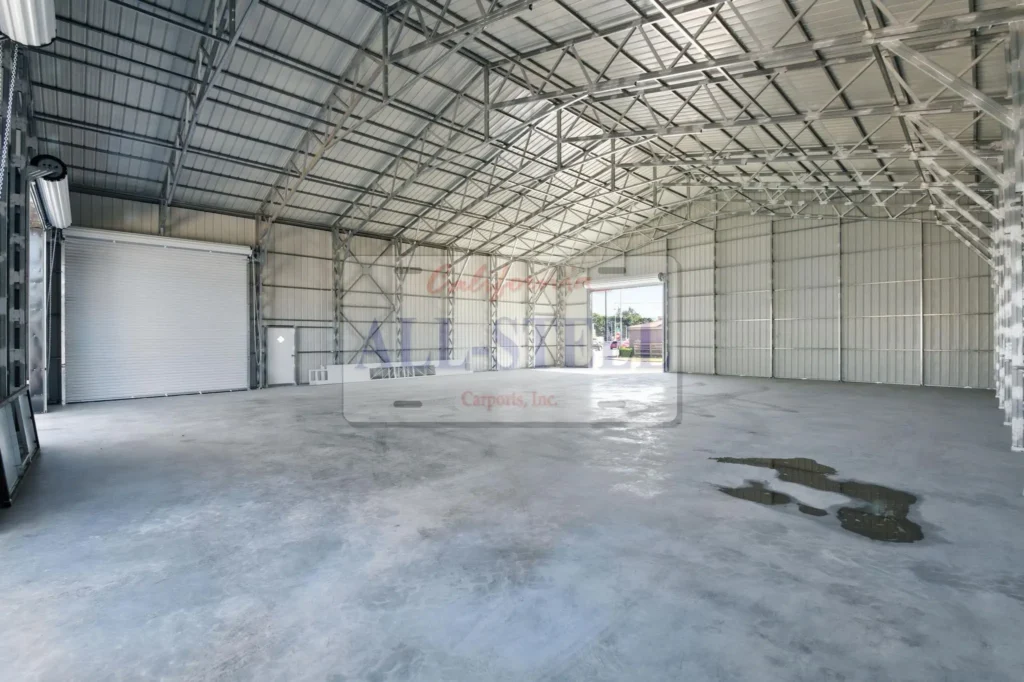
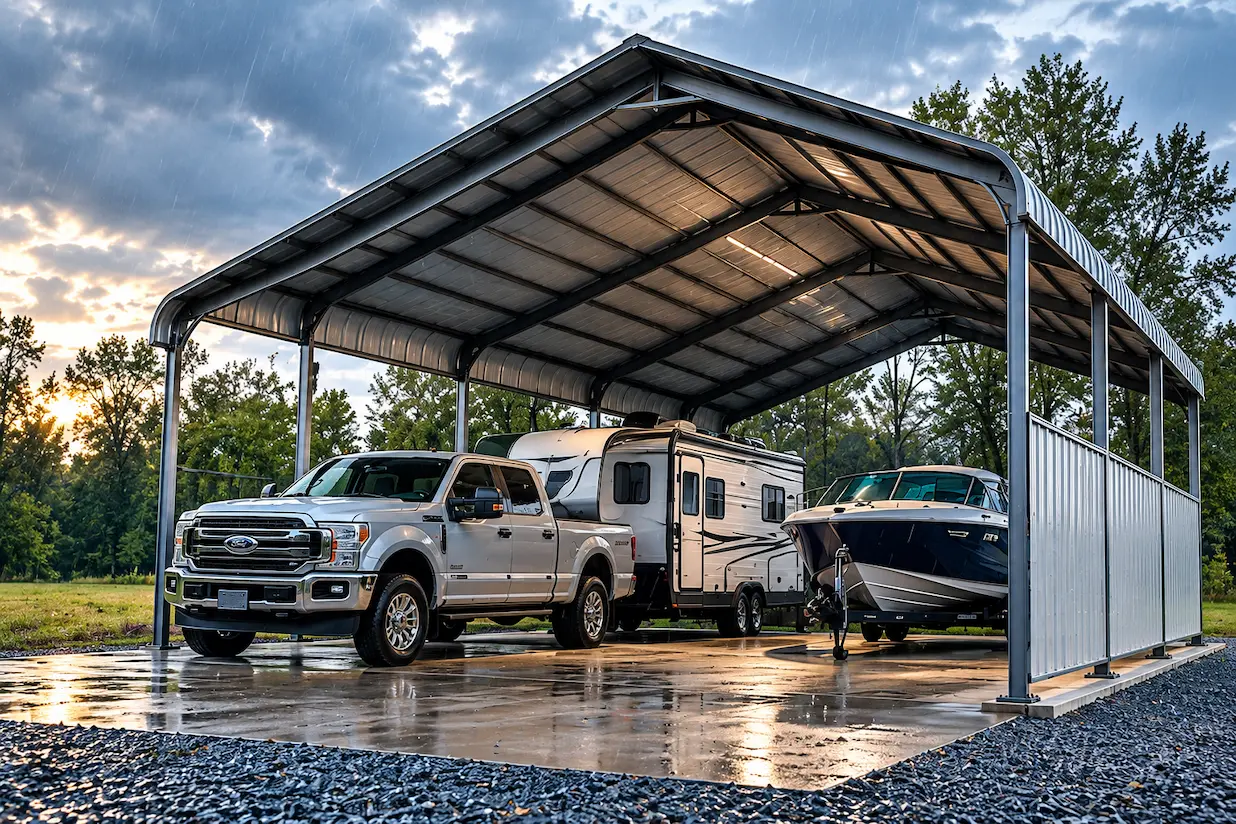
The core categories — carports, storage buildings, clear span, red barns — work the same way in Oregon as anywhere else. What shifts is which one makes the most sense for the climate. Oregon’s frequent rain makes covered storage genuinely valuable for equipment that would otherwise sit out in wet conditions for months at a time, more so than in California’s drier stretches of the year.
Rural and agricultural properties in Oregon use these structures the same way Central Valley properties do — equipment storage, livestock shelter, and covered workspace — just with wet-weather durability mattering more than heat or sun exposure. The Willamette Valley’s vineyards, nurseries, and berry operations lean on covered storage for equipment and supplies in a way that looks different from the row-crop and livestock operations more common in California’s Central Valley, even though the underlying structure type is often the same.
How Oregon’s Wetter Climate Affects Material Choices
Beyond engineering for snow, Oregon’s rain plays into material decisions that matter less in a drier climate. Galvanized steel panels resist corrosion better than uncoated alternatives, which is a bigger factor for a structure that spends most of the year wet than for one baking in dry heat most of the time.
Roof pitch matters for the same reason. A steeper roof sheds water faster and reduces the amount of time moisture sits on the panels, which becomes more relevant the more of the year a property spends under active rainfall rather than occasional storms. None of this changes the building categories available — it just shifts which specifications are worth prioritizing when configuring one.
Getting an Accurate Quote for an Oregon Property
Because permit thresholds and required snow load can shift meaningfully based on exact elevation, a generic size-and-price estimate is less reliable for an Oregon property than for a lot of flatter California sites. Giving the specific property address when requesting a quote, along with elevation if it’s known, gets to an accurate number faster than working off general assumptions.
It also helps to note any existing structures on the property and roughly how far the planned building would sit from property lines. That’s the same information a local building department would ask for during permit review, so having it ready upfront tends to shorten the process on both ends. Financing options are available the same way they are for California properties, if the added engineering requirements push the project above initial budget.
The Same Manufacturer, a Different Set of Details
Buying a metal building in Oregon isn’t a fundamentally different process than buying one in California — but the permit math and the engineering inputs are genuinely different, not just a copy-paste of California’s numbers with the state name swapped. Treating an Oregon property with Oregon-specific numbers from the start avoids having to re-engineer a structure that was sized around the wrong state’s assumptions. Get a quote based on your property’s actual elevation and location, not a statewide average.
FAQs
Do I need a permit for a metal building in Oregon?
Often not for small accessory structures under 200 square feet, one story, and non-habitable — but always confirm with the local building department, since cities and counties can add their own rules on top of the state exemption.
How much snow load does a metal building in Oregon need to handle?
It depends heavily on elevation and location, more than on which region of the state. A site-specific snow load lookup is the accurate way to determine this, rather than a statewide average — two nearby properties at different elevations can require very different specifications.
Does California All Steel deliver to Oregon?
Yes — Oregon is one of the core states served, alongside California.
What’s the biggest difference between buying a steel building in Oregon vs. California?
The permit exemption threshold is larger in Oregon (200 sq ft vs. 120 sq ft), and snow load engineering plays a bigger role given Oregon’s elevation changes across relatively short distances.
Does Oregon’s rain affect which type of metal building makes sense?
It affects the specifications more than the category — galvanized coatings and steeper roof pitches hold up better against sustained wet weather, even though the same core building types (carports, storage, clear span) are available in both states.