Researchers recently reupholstered the interior of a car entirely with UV-reactive synthetic human skin — complete with hair and moles — and then parked it in the sun. What happened next was difficult to look away from. The synthetic skin visibly burned with UV exposure, turning red and blistering in real time — a visceral demonstration of the cumulative UV damage that builds gradually inside a vehicle. The experiment, commissioned by mycar Tyre & Auto and informed by Dr. Joanneke Maitz, a surgeon-scientist in Burns and Reconstructive Surgery at Concord Hospital, was designed to make visible something most drivers never think about: the sun doesn’t stop working on your vehicle just because you’re sitting inside it.
If that’s what UV radiation does to synthetic skin in a matter of hours, consider what years of California sun does to your car’s paint, dashboard, upholstery, and rubber seals. The damage is real, it compounds over time, and it directly affects what your vehicle is worth. The good news is that it’s largely preventable — if you understand what’s actually happening and take the right steps.
What UV Radiation Actually Does to a Vehicle
California’s sun is not just bright — it is relentless. The state’s low humidity and high UV index, particularly in the Central Valley and Southern California, mean that a car parked outside year-round faces a level of solar exposure that accelerates deterioration far faster than in cloudy or temperate climates.
UV radiation works by breaking down the chemical bonds in materials at a molecular level. For your car, that means:
- Paint fading and oxidation. UV rays degrade the pigments in your car’s paint and break down the clear coat — the protective layer on top. Once the clear coat deteriorates, the underlying paint is vulnerable to serious damage, leading to expensive repairs or a full repaint. Colors like red and black absorb more heat and fade faster.
- Dashboard cracking. Temperatures inside a parked car can soar well above outside temps, causing plastics to warp and dashboards to crack. Electronics and screens in the console can also fail if temperatures climb high enough.
- Interior fading and leather deterioration. UV rays penetrate through windows and fade fabrics, vinyl, and leather. Leather and vinyl crack and fade under constant UV and heat exposure, while plastic parts become brittle.
- Rubber seal and tire degradation. Window seals, door gaskets, and tires all suffer from prolonged UV exposure, becoming brittle and prone to cracking — creating water leak paths and reducing tire safety margins.
- Resale value loss. Sun-damaged paint can reduce a vehicle’s resale value by $2,000 to $5,000 or more. Faded paint, cracked interiors, and chalky headlights signal neglect to buyers and appraisers alike.
Your Car Windows Are Not Protecting You — Or Your Car
One of the most common misconceptions about in-car sun exposure is that the windows provide meaningful protection. Research from mycar Tyre & Auto found that 39% of people incorrectly believe car windows block harmful UV rays, while 70% reported feeling protected from the sun while driving.
The reality is more nuanced. Standard automotive glass blocks most UVB rays — the type responsible for visible sunburn — but UVA radiation, which penetrates deeper into materials and causes long-term structural damage, passes through car glass in significant amounts. This is why the driver’s side of a vehicle consistently shows more UV-related wear than the passenger side on cars driven regularly in California: the left window is taking a constant hit.
The same dynamic applies to your car’s interior surfaces. UV light streaming through your windshield and side windows every day is slowly degrading your dashboard, bleaching your upholstery, and drying out your leather — whether you notice it or not.
Why California Is Especially Punishing for Vehicles
Most UV damage guides are written for average conditions. California is not average. The Central Valley — where temperatures regularly exceed 100°F in summer — combines intense UV radiation with extreme heat in ways that accelerate every form of sun damage simultaneously. A car parked in full sun can reach cabin temperatures of 60°C (140°F) or above — conditions that are tough on plastics, electronics, and upholstery.
Heat accelerates the oxidation process already triggered by UV exposure, which means paint that might last 10 years in Seattle may show significant fading and clear coat failure in five years in Fresno or Bakersfield. Darker paint colors — black, dark red, navy — absorb more heat and deteriorate even faster. Low humidity compounds the problem by drying out rubber seals and leather more aggressively than in humid climates where some moisture retention occurs naturally.
For California car owners, sun damage is not a question of if — it’s a question of how fast and how much it will cost to address.
How to Protect Your Car from UV Damage in California
The most effective protection strategies work at multiple levels simultaneously — blocking UV before it reaches the surface, creating a sacrificial barrier on exposed surfaces, and limiting the total sun exposure your vehicle accumulates over time.
Covered and shaded parking
This is the single most effective thing a California car owner can do. Covered parking, combined with a ceramic coating and regular maintenance, can keep a car looking good for 10 or more years even in a sunny climate. A carport or garage eliminates direct UV exposure entirely during the hours your vehicle is parked — which, for most people, is the majority of its lifetime.
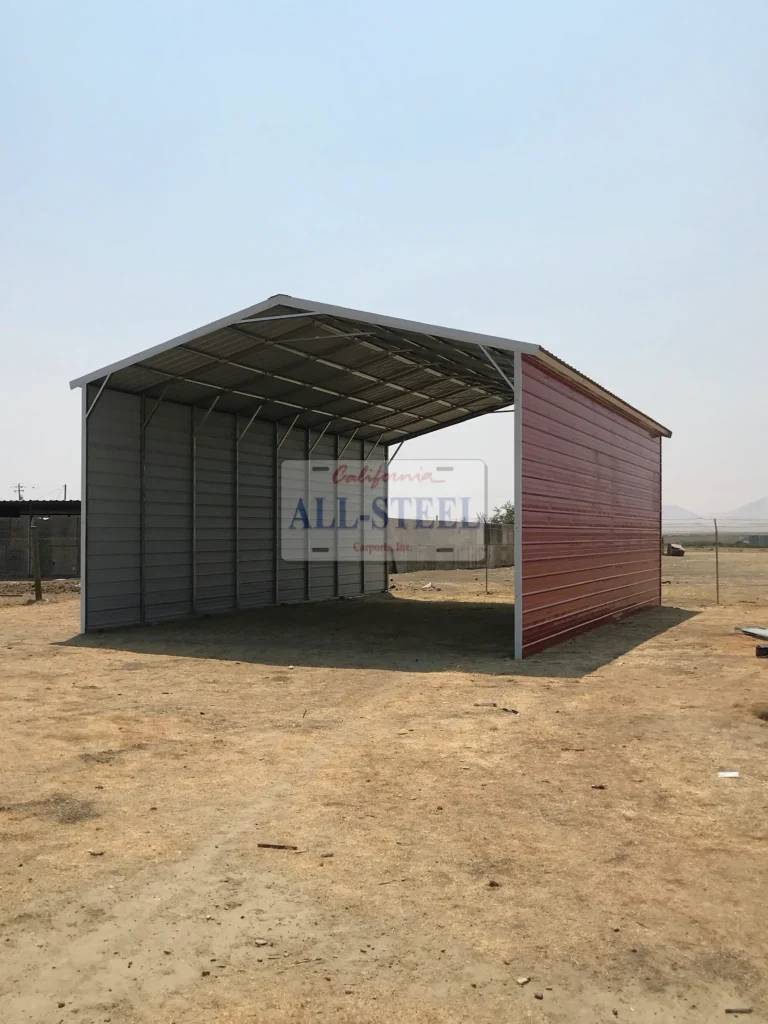
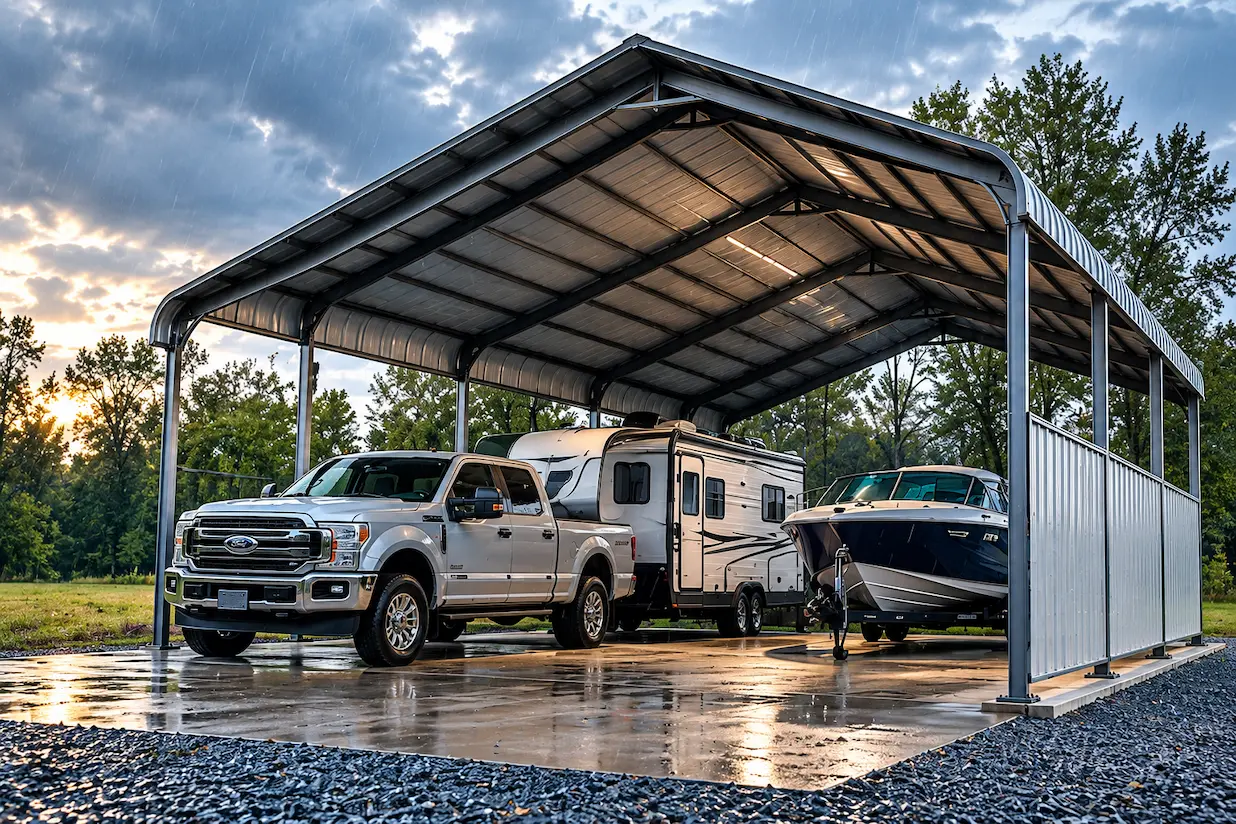
For homeowners without a garage, a metal carport is the most durable and cost-effective covered parking solution available. A permanent steel structure protects your vehicle year-round without the limitations of portable canopies, which degrade quickly under California sun themselves. California All Steel builds and installs custom metal carports designed for California’s wind loads, engineered to last decades, and available in a range of sizes to protect one vehicle or several.
Windshield sunshades
A windshield sunshade is one of the easiest ways to cut cabin heat and UV damage, dropping dashboard surface temperatures and slowing the fading of plastics and leather. It’s an inexpensive, effective tool for anyone who has to park in the open. For maximum protection, also use side window shades on the front doors to protect the steering wheel, center console, and seat upholstery from direct UV.
Waxing and ceramic coatings
Wax provides a sacrificial protective layer over your clear coat that absorbs UV before it reaches the paint. Regular waxing every two to three months is standard maintenance for vehicles parked outdoors in California. For longer-lasting protection, professionally applied ceramic or graphene-style coatings bond chemically with the clear coat and offer stronger UV and chemical resistance, typically lasting two to five years before needing recoat. These coatings protect by bonding with your vehicle’s clear coat, which contains UV blockers, helping slow oxidation and degradation at the surface level.
UV-blocking window tint
Window film that blocks UV radiation protects both your car’s interior and the people inside it. Quality automotive tint can block up to 99% of UV rays entering through the glass, significantly reducing interior fading and heat buildup. This is particularly worthwhile for California drivers who spend significant time behind the wheel — protecting upholstery, dashboard materials, and electronics from the cumulative UVA exposure that standard glass does not stop.
Interior UV protectants and conditioners
For dashboards, door panels, and leather seats, UV-protectant conditioners and dressings nourish the material and include UV blockers that reduce the rate of degradation. Applied regularly, these products extend the life of interior surfaces and help prevent the cracking and fading that reduces resale value. For leather specifically, conditioning every one to two months in a California climate is not excessive — the heat and UV load is far higher than manufacturer guidelines typically assume.
Frequently Asked Questions
How fast does the California sun damage car paint?
Faster than most drivers expect. In California’s high-UV, high-heat climate, visible fading and clear coat degradation can begin showing within two to three years on a vehicle parked outdoors without any protective coating. Darker colors and cars without regular waxing deteriorate faster. Prevention is significantly less expensive than repair.
Does car insurance cover sun damage in California?
Generally, no. Standard auto insurance policies cover sudden, accidental damage — not gradual wear from environmental exposure. Sun damage to paint, interiors, and rubber components is considered a maintenance issue and is not covered by comprehensive or collision coverage. Prevention is the only reliable financial protection.
Do car windows block UV rays?
Standard automotive glass blocks most UVB radiation but allows significant UVA to pass through. UVA is responsible for the deeper, longer-term damage to interiors and is a key contributor to dashboard cracking, leather deterioration, and upholstery fading. UV-blocking window film significantly reduces what gets through.
How much does sun damage reduce a car’s resale value in California?
Estimates range from $500 on the low end for minor fading to $5,000 or more for vehicles with significant paint oxidation, a cracked dashboard, and deteriorated upholstery. In California’s competitive used car market, buyers and dealers discount heavily for visible sun damage because the repair costs are well understood.
What is the most effective way to protect a car from sun damage in California?
Covered parking is the most effective single measure — it eliminates direct UV exposure during the hours a vehicle is stationary, which is most of the time. For vehicles that must park outdoors, combining regular waxing or ceramic coating, a windshield sunshade, UV-blocking window film, and interior UV protectants provides the best available defense short of covered parking.
The Most Permanent Solution: Covered Parking
Sunshades, coatings, and conditioners all slow the damage. They don’t eliminate it. The only way to fully protect a vehicle from California’s UV load is to keep it out of the sun when it’s not in use — which is most of the time.
A permanent metal carport is the most practical solution for the majority of California homeowners who don’t have a garage or whose garage is already full. Unlike portable canopies — which fade, tear, and require constant maintenance under the same sun conditions they’re trying to block — a steel carport is engineered to outlast decades of California weather. It requires no ongoing maintenance, provides full overhead protection, and can be sized to cover multiple vehicles, boats, or RVs.
When you factor in the cost of repainting sun-damaged paint, replacing a cracked dashboard, re-upholstering faded leather seats, and the reduction in trade-in or resale value, the math on covered parking shifts quickly. California All Steel offers free quotes on custom metal carports built and installed to meet California’s structural requirements — a one-time investment that protects whatever you park underneath it for years to come.