You’ve decided to protect your vehicle with a carport. Now comes the critical question: how wide does it need to be? Choose too narrow, and you’ll scratch your doors on posts or struggle to get in and out. Go too wide and you’re spending hundreds or thousands more than necessary.
The internet offers conflicting advice. Some sources say 10 feet works fine. Others insist on 16 feet minimum. Your neighbor’s carport looks different than the ones you see advertised online.
This guide delivers specific width requirements by vehicle type, clearance calculations, and California code considerations. You’ll know exactly what dimensions work for your situation and why.
How Wide Does a Carport Need to Be: Quick Answer
For a single-car carport, plan on 12-14 feet minimum width, with 14-16 feet recommended for comfortable use. Two-car carports need 20-24 feet minimum, with 22-24 feet providing the best balance of functionality and cost. Larger vehicles like trucks, SUVs, and RVs require 14-20+ feet depending on specific dimensions.
The formula is straightforward: vehicle width + clearance for doors + maneuvering room. A standard sedan measures about 6 feet wide. Add 3-4 feet per side for door swing and you need 12-14 feet minimum. Two sedans side-by-side need their combined width (12 feet) plus clearance on each side (5 feet) plus space between vehicles (2 feet) = 19 feet minimum, 22-24 feet for comfortable use.
Why the variation? Vehicle size differs dramatically. Door swing patterns vary. Some people need loading space, others just park, and according to data, the average vehicle width has grown roughly 17% (around 10-12 inches for some segments) from 2013-2023.
In California, building codes, property setbacks, and wind load requirements affect sizing decisions. Fire-prone areas may have specific construction requirements that influence design.
Why Carport Width Affects Value and Usability
In California, carport width is not just about fitting today’s vehicle. It is about long-term usability and property value. A carport that is even 2 feet too narrow can make daily parking difficult, with limited door swing, scraped mirrors, and tight maneuvering.
Cost is another major factor. Rebuilding or modifying a two-car carport in California often ranges from $15,000 to $30,000, while increasing width during initial construction typically costs $1,500 to $2,500. This makes proper sizing upfront a far more efficient investment.
Properly sized covered parking can also improve resale appeal. National Association of Realtors research and regional MLS data show that off-street covered parking can add roughly $5,000 to $15,000 in competitive California markets. Poorly sized structures, however, may reduce buyer interest and be viewed as projects rather than assets.
Future vehicle size should also be considered. EPA and automotive industry data show average vehicle footprints have increased about 6 to 8 percent over the past decade, driven by the popularity of SUVs and trucks, which now account for over 75 percent of new vehicle sales. Building to minimum widths often leads to regret within 5 to 7 years.
Standard Carport Width Requirements by Vehicle Type
Carport width depends on vehicle size and door clearance. While minimum widths may fit, wider carports provide easier access, less risk of damage, and better long-term usability. Use the guidelines below to choose the right width for your vehicle.
Single Car Carport Width
- 12 feet (minimum): Works for compact cars in budget-focused builds. Vehicles like a Honda Civic (5’11”) or Toyota Corolla (5’10”) will fit, but side clearance is tight. Door opening is limited, and maneuvering room is minimal. Expect careful parking. This option typically saves $800–$1,200 compared to wider designs.
- 14 feet (recommended): Ideal for most sedans. Cars such as the Honda Accord, Toyota Camry, and Ford Fusion fit comfortably with about 3 feet of clearance per side, allowing full door opening and easier entry and exit. This is the most common and practical choice for single-car use.
- 16 feet (ideal for larger vehicles): Best for SUVs, trucks, and luxury vehicles. Full-size trucks like the Ford F-150, Chevy Silverado, and large SUVs benefit from the added space. The extra width also allows room for storage or equipment. In California, a large share of registered vehicles are trucks and SUVs, making 16-foot carports increasingly common.
Key Sizing Tip: Measure your vehicle at its widest point, including mirrors. Add at least 6 feet total clearance (3 feet per side), then round up to the nearest even foot for comfort and future flexibility.
How Wide Does a 2-Car Carport Need to Be
- 20 feet (minimum): Fits two compact cars with tight clearance. Two Honda Civics measure about 11’10” combined. Adding minimal side clearance and center spacing brings the total width to roughly 20 feet. This width is commonly permitted in California but requires careful parking and limited door opening.
- 22–24 feet (recommended): The practical standard for most homeowners. 22 feet works well for two sedans, while 24 feet comfortably fits a sedan and SUV. Drivers can open doors at the same time, maneuver easily, and maintain safe spacing between vehicles.
- 24–26 feet (ideal): Best for two trucks or large SUVs. Two full-size pickups measure about 13’4″ combined. With clearance and spacing, usable comfort begins at 24 feet. This width also future-proofs against vehicle upgrades, which are common within a typical ownership cycle.
Oversized Vehicle Widths (RVs, Work Trucks, Vans)
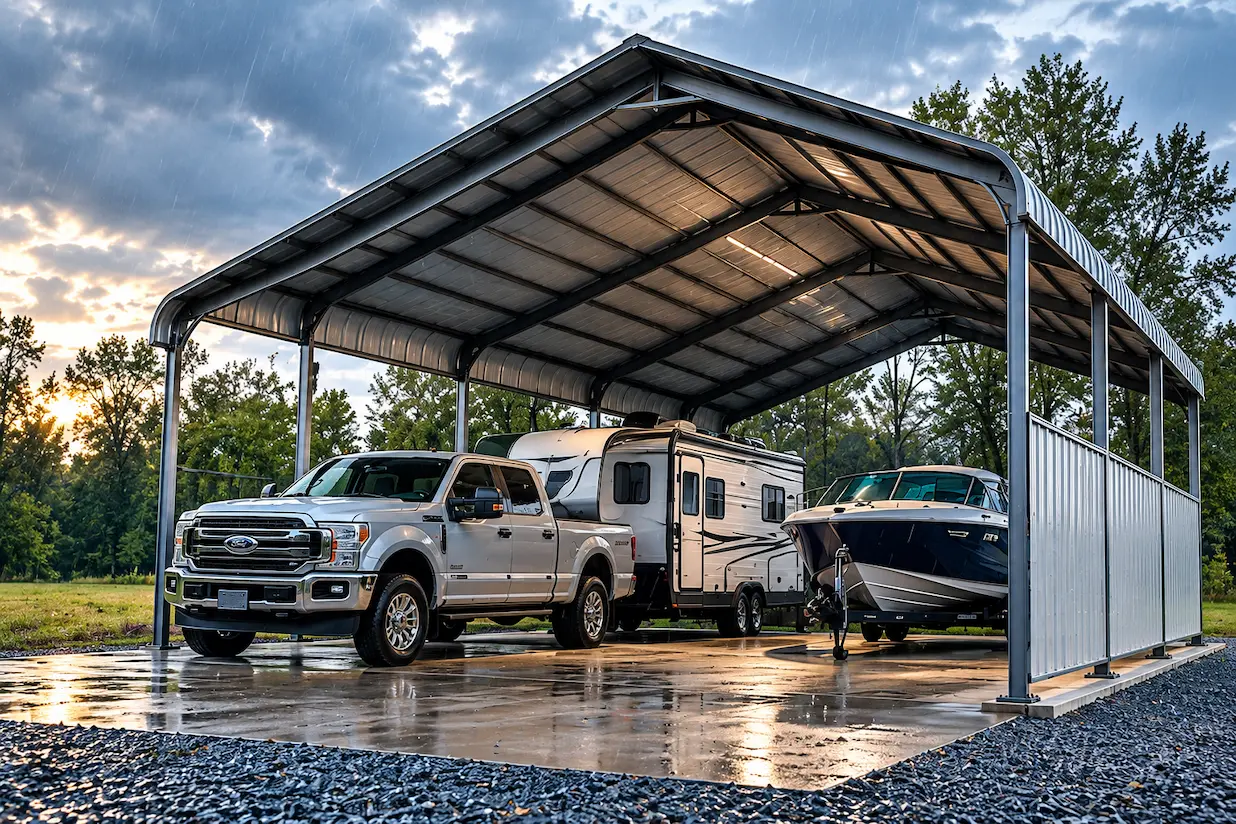
- Class A motorhomes (8–8.5 ft wide): Require 14–16 feet minimum. Most California owners choose 16–18 feet to allow clearance for mirrors, awnings, slide-outs, and maintenance access.
- Travel trailers (7–8 ft wide): Fit in 14 feet, but 16 feet makes hitching easier and provides space for propane tanks or front-mounted storage. Fifth wheels (8–8.5 ft wide) need 16–18 feet for safe access and maneuvering.
- Commercial work vans (6’7″–7’1″+ with racks): Ford Transit and Sprinter vans typically need 14–16 feet to allow side-door and rear cargo access, especially with ladders or roof equipment.
- Dual-wheel and commercial trucks: Exceed 8 feet wide with mirrors extended. These vehicles require 16–18 feet minimum for safe entry, exit, and frequent towing use.
- Boats on trailers (7–9 ft wide): Plan for 16–20 feet, depending on boat size and whether you need space to walk around or work on the boat while stored.
Sizing tip: Measure the widest point, including mirrors or attachments, add at least 6 feet of total clearance, and round up for easier access and future flexibility.
Beyond Width: Complete Carport Dimension Planning
Height Requirements
- Standard vehicles: Plan for 8–10 feet of clearance. Sedans and most SUVs fit at 8 feet, but 10 feet allows room for roof racks or cargo carriers.
- Trucks with toppers or shells: Require 10–12 feet. Many pickups reach 7–7.5 feet tall, and added clearance is needed for safe entry and future modifications.
- RVs and trailers: Need 12–16 feet, depending on type. Class A motorhomes and fifth wheels commonly reach 12–14 feet, and roof-mounted equipment requires additional clearance.
- California factors: Roof pitch for rain or snow and coastal wind exposure can affect allowable height. Always confirm local code limits.
Depth (Length) Requirements
- Single-car carports: Require 20–24 feet of depth. Most vehicles are 15–18 feet long, and 20 feet provides bumper clearance and weather protection. Choose 24 feet if you want room for storage or a light workspace behind the vehicle.
- Two-car carports: Use the same 20–24 feet since vehicles park side by side. Many owners opt for 24–30 feet to store lawn equipment, add a workbench, or increase flexibility.
Special uses:
- Pull-through designs: 28–32 feet for maneuvering at both ends
- Boat trailers: 24–28 feet, depending on boat length
- Rear workspace or storage: 26–30 feet
Planning tip: Deeper carports increase usability with minimal added cost compared to later expansion.
Clearance and Maneuvering Space
- Side clearance: Allow 18–24 inches per side from the vehicle to the nearest post or wall to protect mirrors and provide walking space.
- Door swing: Plan 3–4 feet of unobstructed space on the primary access side. Most vehicle doors open up to 4 feet, and inadequate clearance leads to tight exits and vehicle damage.
- Loading space: Add 2–3 feet beyond door clearance for groceries, tools, or passenger access, especially in single-side access carports.
Future-proofing: Vehicles continue to grow. Industry data shows average vehicle width and length have increased in recent years. Building about 2 feet wider than current needs helps ensure long-term usability over a carport’s typical lifespan.
California Carport Width Codes and Considerations
In California, carport width is influenced not only by vehicle size but also by local building codes, climate conditions, and property value expectations. Understanding these factors early helps ensure your carport is compliant, durable, and adds long-term value.
Building Code Requirements
California building codes affect carport width through setbacks, fire rules, wind loads, and permits. Most jurisdictions require 3 to 5 feet of setback from property lines, which can limit available width, especially on corner lots. Setback compliance should be confirmed before construction.
Fire-rated construction is required in State Responsibility Areas and Very High Fire Hazard Severity Zones. Metal carports typically meet non-combustible standards, but roof ratings and defensible space rules still apply. Width alone does not trigger fire requirements, though larger structures may receive additional review.
Wind load requirements vary by region, with coastal areas reaching up to 140 mph and inland zones ranging from 90 to 120 mph. Wider carports create greater wind exposure, making engineered designs important beyond 24 feet.
Permits are required for most carports over 120 square feet. A 12 by 20 carport generally needs approval, with permit costs typically ranging from $500 to $3,000 depending on jurisdiction.
Climate Factors Affecting Width
Climate conditions in California influence how wide a carport can be built and how it must be engineered. Wider carports in coastal areas face increased wind loads and require stronger posts, added bracing, and proper anchoring.
In inland regions, additional width improves airflow and reduces heat buildup around vehicles. Narrow carports trap heat, while wider designs allow better ventilation during summer months.
In northern snow zones, wider roofs carry more snow weight. Carports in areas such as Truckee or Mount Shasta require heavier structural support than those in milder regions. Local snow load ratings determine required roof and framing strength.
Seismic requirements apply statewide. Wider carports need proper lateral bracing and secure foundations to meet California earthquake standards.
Property Value Considerations in California
Carport width can directly affect property value in California’s competitive housing markets. Properly sized two-car carports, typically 22 to 24 feet wide, are associated with $5,000 to $10,000 higher resale value, and National Association of Realtors data shows covered parking ranks among the most desired features for California buyers. Buyers notice when parking feels tight, and undersized carports are often viewed as limitations rather than assets.
In higher-end markets, narrow carports are especially detrimental. Homes priced above $800,000 with 20-foot two-car carports frequently face buyer resistance, while wider 24 to 26 foot designs align better with luxury expectations and support stronger asking prices.
California households average more than two vehicles per home, making single-car carports less appealing to most buyers. Two-car coverage significantly expands marketability. Building slightly wider also protects future value as vehicle sizes change. Spending an additional $2,000 to $3,000 upfront can add $5,000 to $8,000 at resale and reduce time on market.
Choosing the Right Carport Width for Your Needs
Use the guide below to match carport width to your vehicle size and anticipated needs.
Quick Decision Guide
Single compact car: 12 to 14 feet works for small sedans such as the Civic, Corolla, or Sentra. Clearance is tight but functional for budget-focused builds.
Single standard vehicle: 14 to 16 feet suits most sedans and small SUVs like the Camry, Accord, RAV4, or CR-V. This width allows full door opening and comfortable maneuvering.
Single large vehicle: 16 to 18 feet is recommended for trucks and large SUVs such as the F-150, Silverado, Tahoe, or Expedition. This provides clearance for wide mirrors and doors.
Two standard vehicles: 22 to 24 feet is ideal for two sedans or a sedan and small SUV. This is the most common two-car carport width in California.
Two large or mixed vehicles: 24 to 26 feet accommodates two trucks or a truck and sedan with proper spacing.
RV or oversized vehicle: 14 to 20 feet or more, depending on vehicle size. Measure the widest point and allow clearance on both sides.
Commercial or multi-use: 26 to 30 feet or more for equipment storage or multiple vehicle use.
When to Size Up
Choosing a wider carport upfront is often the better long-term decision. Size up if vehicle upgrades are likely, resale value matters, or multiple drivers use different vehicle types. Extra width also allows side storage for tools or equipment. In California’s competitive real estate market, proper sizing improves daily usability and keeps your carport affordable protection cost aligned with long-term property value.
Get Your Carport Width Right the First Time
Choosing the correct carport width comes down to balancing vehicle size, daily usability, and long-term value. Narrow widths may reduce upfront cost, but wider designs provide easier access, better protection, and greater flexibility as vehicles and needs change. Neither option is wrong; one simply fits your situation better.
Consider your current vehicles, likely upgrades, and property constraints when deciding. In California, where codes, climate, and resale expectations matter, building slightly wider often delivers better long-term results.
For help selecting the right carport width for your property, contact California All Steel for clear, practical guidance tailored to your vehicles and local requirements.
Frequently Asked Questions About Carport Width
What is the minimum size for a carport?
The absolute minimum carport size is 10×20 feet for compact cars in some jurisdictions, though this provides almost no practical clearance. Most California building codes and functional requirements demand 12×20 feet minimum for single vehicles. For comfortable use with adequate door clearance, 14×20 feet is the recommended minimum that actually works well.
How narrow can a carport be?
A carport can legally be 8-10 feet narrow in some areas, but this width is functionally impractical for protecting actual vehicles. The narrowest workable width is 12 feet for compact cars, while 14 feet is the practical minimum for standard vehicles. Anything narrower creates scratching hazards, door clearance problems, and essentially unusable space.
What size carport can you build without a permit?
California permit requirements vary by jurisdiction, but most require permits for carports exceeding 120 square feet (10×12 feet). Urban and suburban areas strictly enforce these requirements, while some agricultural zones allow larger unpermitted structures. Always verify with your local building department—unpermitted structures create serious problems when selling property or making insurance claims.
Do carports decrease property value?
Quality carports increase California property values by $5,000-$12,000+, depending on size, materials, and local market conditions. Properly sized metal carports (22-24 feet wide for two cars) significantly enhance appeal in competitive real estate markets. However, undersized, poorly maintained, or unpermitted carports can decrease value by appearing as problems requiring replacement rather than valuable assets.
How wide should a carport be for a truck?
Modern full-size trucks (F-150, Silverado, Ram 1500, Tundra) measure 80-82 inches wide and need 14-16 feet minimum carport width. For comfortable door opening, equipment access, and tool storage alongside the truck, 16-18 feet is recommended. Dual-wheel trucks and commercial work trucks require 16-20 feet minimum depending on accessories and equipment.
Can a 20-foot-wide carport fit two cars?
A 20-foot-wide carport technically fits two compact cars but provides minimal clearance and limited door opening space. For practical two-car use with comfortable door access, vehicle separation, and maneuvering room, 22-24 feet is strongly recommended. Modern trucks and SUVs absolutely require 24+ feet for functional two-vehicle coverage.
What is the standard width for a 2-car carport?
The standard width for two-car carports is 22-24 feet, comfortably accommodating two standard vehicles with adequate door clearance, vehicle separation, and maneuvering space. For two trucks or large SUVs, 24-26 feet becomes standard. California’s trend toward larger vehicles makes 24 feet the practical minimum for most two-car applications.
How much space do you need between cars in a carport?
Maintain a minimum of 24 inches (2 feet) between vehicles for door clearance and comfortable entry/exit from both vehicles. Ideal spacing is 30-36 inches, allowing both drivers to open doors simultaneously without collision risk. This spacing, combined with 18-24 inches of clearance to posts on each outer side, determines the total required carport width.